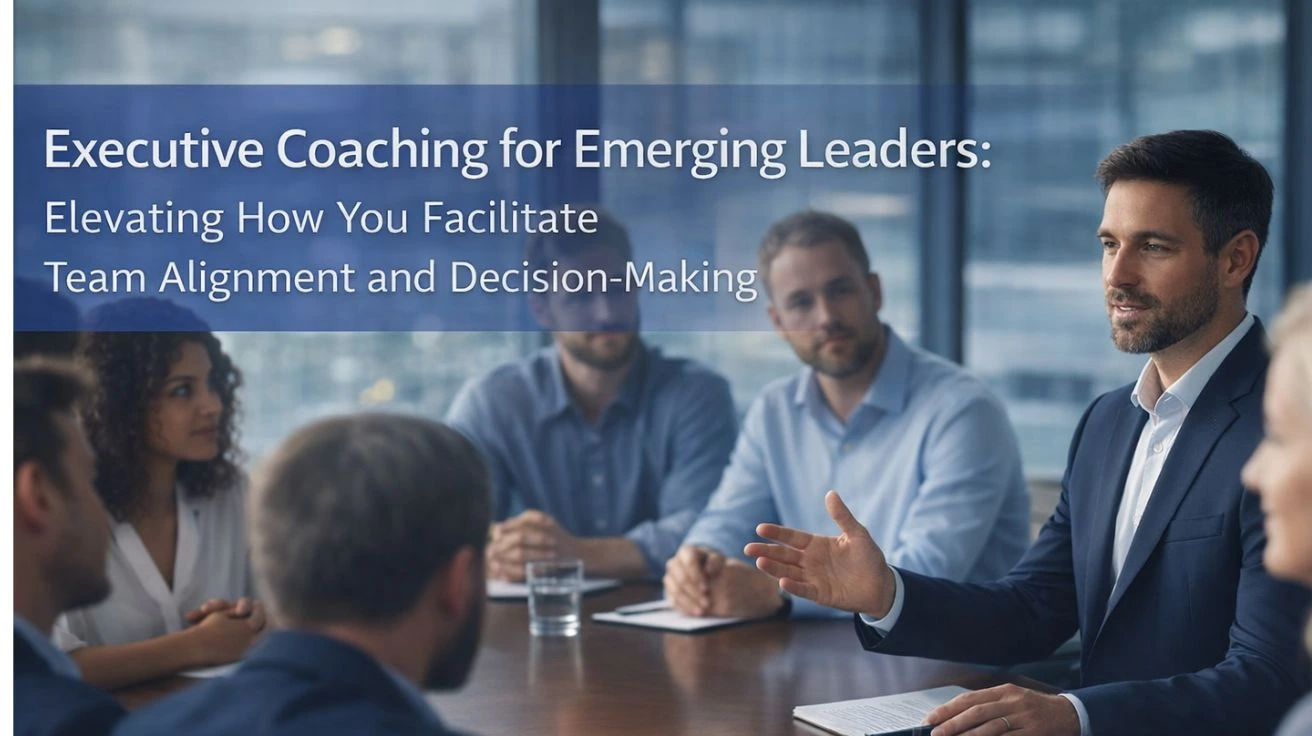
Why Executive Teams Don’t Need Better Meetings — They Need Better Facilitation
Most executive teams don’t suffer from a lack of meetings.
In most of the rooms I work in, people complain they have too many.
The problem isn’t time spent together. It’s what those conversations actually produce.
The agenda is complete and well researched. Updates are thorough. The discussion is thoughtful.
Everyone agrees. Heads nod around the table—which, by the way, is not a reliable sign of agreement.
Then, three weeks later, the same issue shows up again. Sometimes under a different label. Sometimes framed as a “new” concern. But functionally, nothing has moved.
That’s not a meeting problem.
It’s a facilitation problem.
Meetings Don’t Create Alignment — Facilitation Does
A meeting organizes time.
Facilitation organizes thinking, decisions, and ownership.
That distinction matters more than most leadership teams realize.
Many executive meetings are well run but poorly designed. They move efficiently through updates, surface perspectives, and capture notes—but they never resolve the underlying questions that determine progress:
What decision actually needs to be made?
Who owns it?
What tradeoffs are we accepting?
What changes as a result of this conversation?
Without facilitation, those questions remain implicit—or quietly avoided.
The Illusion of Alignment at the Executive Level
Executive teams are particularly vulnerable to false alignment.
Smart, experienced leaders often signal agreement out of efficiency, politeness, or fatigue. Sometimes all three. Reservations stay unspoken. Assumptions go untested. Disagreement goes underground—not because it doesn’t exist, but because the conversation never made room for it.
On paper, alignment appears to exist.
In practice, it doesn’t.
Good facilitation makes misalignment visible early, while it can still be addressed productively—before it turns into stalled execution, side conversations, or quiet resistance.
Facilitation Is Not Moderation
Moderation keeps the conversation moving.
Facilitation ensures the conversation matters.
A facilitator’s role is not to make meetings smoother. It’s to help leaders do the work they often avoid under pressure:
Naming what’s unclear
Surfacing competing priorities
Designing decisions instead of debating opinions
Creating ownership that actually holds
At the executive level, alignment problems are rarely about disagreement. They’re about avoidance.
Why Strategy Sessions Fail Without Facilitation
Strategic planning sessions often fail not because the strategy is wrong, but because the facilitation is insufficient.
Teams leave with:
Broad agreement but vague ownership
Ambitious goals without execution clarity
Action lists disconnected from decision authority
Many teams believe roles and responsibilities are clear when they leave the room.
They’re usually not.
What’s clear is intent. What’s missing is precision:
Who owns the decision?
Who owns the work that follows?
What happens if progress stalls?
When should this resurface—and with whom?
Without facilitation that forces those questions into the open, accountability remains assumed rather than designed.
When Facilitation Changes the Outcome
The difference becomes obvious when facilitation is done well.
Leaders leave the room knowing:
What was decided
What was deferred
What tradeoffs were made
Who owns what next—and when progress should be visible
Just as importantly, they leave committed—not because they were persuaded, but because the conversation was designed to produce clarity, ownership, and understanding.
That’s when momentum begins.
A Different Standard for Leadership Conversations
Executive teams don’t need more meetings.
They need fewer, better-designed conversations—facilitated with intent.
When facilitation is treated as a leadership discipline rather than a meeting skill, decisions stick, execution improves, and progress becomes visible.
That’s the difference between activity and forward motion.
If your leadership team is investing time in meetings or strategy sessions that aren’t translating into action, it may be time to rethink how those conversations are facilitated.
Acrux Consulting works with executive teams, boards, and public-sector leadership groups to facilitate alignment, decisions, and execution when the stakes are high.
Let’s start with a conversation.