The “five-year plan” isn’t just tired it’s effectively dead in 2026.
In a dynamic market characterized by rapid change and constant noise, the most expensive error that a leadership team could make today is confusing a 50-page slide deck with a strategy. The truth? Strategy isn’t a document. It’s a living, breathing state of alignment, supported by strategic alignment consulting.
As we face the challenges of 2026, the competitive advantage won’t go to the team with the best AI or the most data. It will belong to the team that can pivot quickly and communicate smoothly. Now, we must look at the reasons traditional planning is failing and why the facilitated retreat has become the ultimate tool of strategic agility.
The illusion of “paper alignment.”
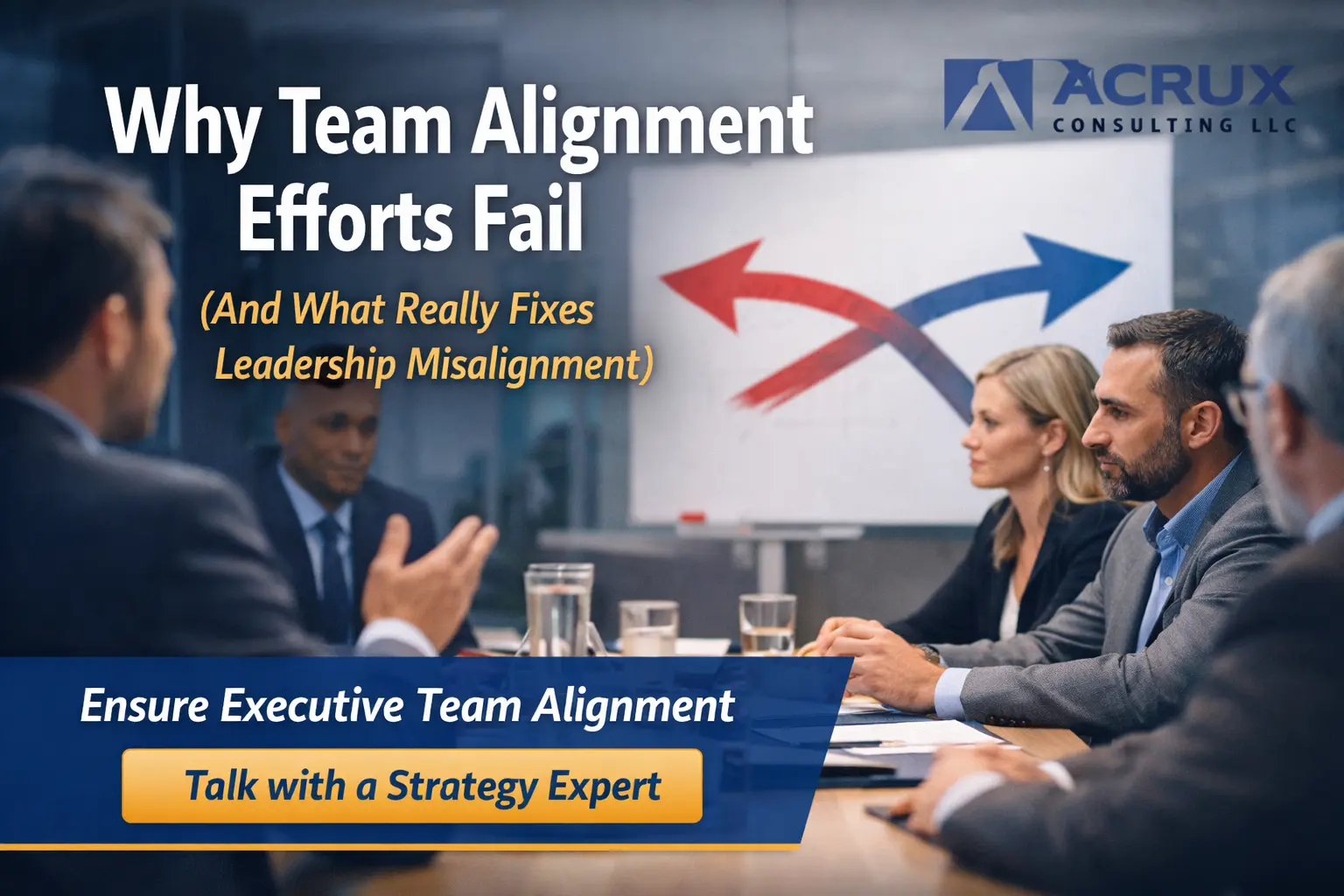
Most executive teams suffer from what we call “The Nod”. We’ve all seen it: at the boardroom table everyone agrees on the high-level goals. But once they leave that room they return to their silos and protect their own budgets and prioritize their own KPIs. In 2026, that “shadow agenda” is fatal. When the market demands quick change, a team that is only 80% aligned will have 100% friction. That 20% gap may seem small, but it’s exactly where execution dies.
Why Agility is a Human Problem, Not a Technical One.
Strategic agility is frequently misdiagnosed as a need for better, faster software. It isn’t. Agility is a leadership discipline that embodies the following:
Productive friction: The ability to argue passionately about the “elephants in the room” without being too personal.
- Radical Trust: Knowing that when the plan changes, your colleague in Operations supports you in Sales.
- Issue Resolution: Going over polite updates to solve the underlying conflicts that stifle growth.
The Facilitated Retreat: A Crucible for Truth.
If you set out to “do strategy” in a 2-hour Tuesday morning meeting, you will likely discuss only surface level issues. You might solve the urgent, but you won’t touch the important. People realize that there is limited time, so they bring up what they think will generate agreement. This is where the Facilitated Retreat earns its ROI. By removing the team from the daily “firefighting,” you create a container where real work can take place. A neutral facilitator (like the Acrux team) does what an internal leader rarely can:
- Surface the Undiscussables: We ask the questions that have been kept out of the way for six months.
- Force Prioritization: We move the team from 20 “priorities” to the 3 “Must-Win Battles.”
- Build Collective Ownership: We insist the strategy is not “The CEO’s Plan,” but the shared vision that every leader is ready to defend.
From Retreat to Results.
The goal of a retreat is not to leave with a binder; it’s to leave with a rhythm. Agility in 2026 means jumping to 90-day delivery cycles. The retreat is the North Star, but the human team-centered environment that comes from there allows each team to make small adjustments every week without losing sight of the destination.
The Bottom Line.
Technology is a commodity. Data is everywhere. But a unified, agile leadership team? That is rare. If your 2026 plan looks like a relic of 2024, it’s time to stop planning and start aligning. Your team doesn’t need another meeting they need a breakthrough.
FAQs
1. Why are traditional strategic plans failing in 2026?
Traditional plans fail because they prioritize documentation over alignment. In fast-moving environments, static plans cannot keep pace with change, leading to misalignment and stalled execution.
2. What does strategic agility actually require from leadership teams?
Strategic agility requires more than tools or data it depends on leadership discipline, honest dialogue, and the ability to resolve conflicts quickly while maintaining trust across functions.
3. What is the role of alignment in successful strategy execution?
Alignment ensures that leaders move in the same direction beyond the meeting room. Without true alignment, even strong strategies break down during execution due to competing priorities.
4. How do facilitated retreats improve strategic outcomes?
Facilitated retreats create the space for deeper conversations, surfacing hidden issues and forcing prioritization. They help teams move from surface agreement to real commitment.
5. When should an organization consider strategic alignment consulting?
Organizations should consider strategic alignment consulting when teams appear aligned in meetings but struggle with execution, slow decision-making, or internal friction that limits progress.